Search This Blog

Showing posts with label Mormon cosmology. Show all posts

20141002

Amida Buddha Versus God: Neither Buddhist nor Christian Yet Both Buddhist and Christian (satire)

Amida Buddha is not a god, and the Pure Land is not a heaven. This is the difference between Buddhism and monotheism.

For a Buddhist can believe in the Primal Vow, and have faith that the Pure Land of Bliss exists, precisely because Amida Buddha was but a mortal who after many eons became a Buddha who awakened and is reborn in his Pure Land.

No one can say the same about God and heaven without sounding like he is babbling about a New Age cult or folk Christianity.

Though one American folk Christianity almost fits the bill: Mormonism when the Christology is overlooked for the esoterism inherent in Latter-Day Saint cosmology (premortal existence and the afterlife).

However, it takes a great leap of faith to see echoes of the Pure Land in the Three Glories of the Mormon Afterlife, namely the Celestial Kingdom, the Terrestrial Kingdom and the Telestial Kingdom.

Since Christianity is exclusive of other religions, the way I overcome the false dilemma of "serving two masters" is to consider LDS to be a materialist Christianity, as evidenced by the angel Moroni, the appearance of God and Jesus to Joseph Smith, and even the statue of Jesus Christ. In contrast, Pure Land Buddhism is a Buddhism that transcends materialism yet is like a diamond of the mind which reflects the spirit of Christianity.

Is not the Holy Ghost an echo of Buddha Nature? Cannot Buddha Nature cut through infinity to embrace the Holy Ghost?

Only those people of the LDS faith who are strict on the Christology would call this syncretism and object to it, due to their lack of insight about Pure Land Buddhism and possible rejection of religious pluralism.

For Christology is religiously exclusive to Christianity, and has rejected the metaphors and symbolism of Buddhism, while subtly accepting the syncretism from neo-Platonism and Roman mystical sources - especially the concept of an immortal soul, which is not what is meant by "immortal life".

Indeed, the immortal life as mentioned in the New Testament refers solely to the the state of being of the soul in the afterlife. For in this reality, the soul is mortal and begins at birth only to end at death until End of Days.

Then it arises and takes on a new body in the afterlife in one of the Three Glories.

In contrast, Pure Land Buddhism rejects the concept of immortality, and posits that each being's life is finite but rejects totally the concept of an immortal soul. For it is consciousness which lives on after death, yet this consciousness is not an immortal soul. The closest analogue in LDS cosmology is "intelligence."

Within context of Buddhism, immortality means the state of being which lasts for a very long but finite time. Even "forever" too is an exceeding long but finite period of time, too. Therefore, an immortal life is still a very long life which has an end in the indefinite future.
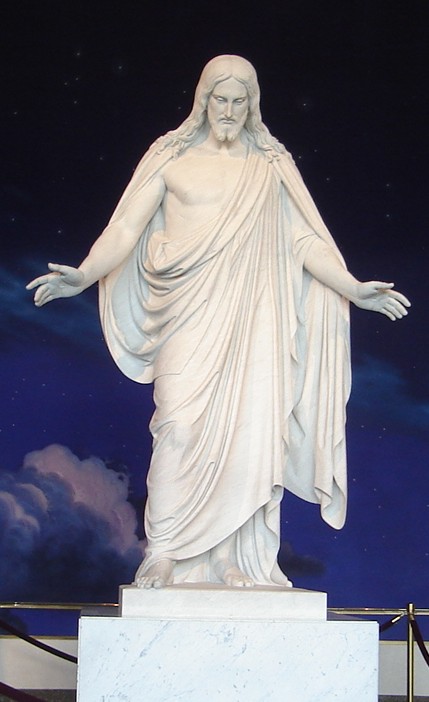
Thus, strict Christology is composed of magical thinking about time and is simplistic about premortal life and the afterlife.

Yet LDS Cosmology is merely the wire frame upon which the tenets of other religions may be placed until they fit right for each LDS member, no matter what their religious background is.

Although there is no Amida Buddha in LDS cosmology, the faint echoes of Buddhism do exist. Even so, this is a heterodox view which tries to synthesize LDS cosmology with Pure Land cosmology. Thus, it is neither Buddhist nor Christian yet both Buddhist and Christian. Overall, though, it would still take a leap of faith to view it as such.


"If you have faith, nothing shall be impossible" — Matthew 17:20


Originally posted on Jun 25, 2013 at 6:51 PM

20140820

A Jack Mormon Confession (satire)

Since June I personally have refrained from hot drinks, alcohol, illegal drugs and tobacco. As well, I am celibate.

Between myself and God, I am repenting my past sins in private. On Friday, August 29, I am to be baptized as a Mormon.

So all that talk of remaining a Jack Mormon is pure satire. My epiphany came when I read the anti-Mormon views on the interviews preceding baptism: they gave me the wrong impression.

Nobody in the hierarchy asks you to confess your darkest sins to them, for that isn't supposed to be shared with another mortal soul.

While I am still going to be liberal and still write about Buddhism, politics and other topics that I am interested in, I am also going to write about Mormonism as objectively as I am able. Though the anti-Mormon propaganda will no longer be of interest to me, except perhaps to provide inspiration for commentary.

For now, this post will provide me with the opportunity to explain simply why I decided to be baptized as a Mormon.

With eyes open and an open heart, I attended all the instruction hours since the end of May until now and will continue to do so.

While I am convinced that Joseph Smith Jr was inspired by God to write the Book of Mormon, the Doctrine and Covenants, and the Pearl of Great Price, the Testimony of the Three Witnesses only convinces me of his inspiration. However, I will go along with the cover story that the angel Moroni took those brass plates back to wherever he went.

My own statement above is not a confession of doubt but is made because I have never been shown the original literature by the angel Moroni.

As well, the Egyptian hieroglyphics which inspired Joe Smith to write the Book of Abraham do not translate as that book. Even so, I would consider Mr Smith as inspired by God to write all the scriptures specific to Mormonism and consider him a Mormon prophet.

Nothing I have written so far will fully explain why I became a Mormon. I am sure that it's because I am a people pleaser.

Also, the fact that this local Mormon community is the least judgmental of all Christian denominations has also convinced me that my choice is the best one to make out of all the choices that I faced.

For I could have rejected Mormonism and dealt with being a Buddhist whose spirituality accepted that there is a God and even allowed for the Christ. On closely examining my sarcastic statement that "my Christ is the Buddha", I realize that the statement is considered a religious one by Christians of other denomination.

So my explanation for becoming a Mormon is actually summed up by the concept of the Buddha as my Christ, due to the religious pluralism that I have been quietly practising since 1990. This has been confirmed for me by the Mormon cosmology regarding the souls of pre-mortal times to today's current incarnation on Earth and to the Afterlife. Even Spirit World and Spirit Prison fit into my Buddhist worldview, though the Celestial, Terrestrial and Telestial Kingdoms would become similar to Buddhist heavens.

Of course, at first glance, the Mormon cosmology is in my eyes more like a rough draft of the more complex Buddhist cosmology. Though it is more likely that I am not going to revert to Buddhism because of this revelation.

Another reason why I became Mormon because I like the fact that the Mormon literature has had articles on Buddhism, Hinduism, Islam, and Judaism written without critique of each religion.

It is that religious pluralism which confirms my belief that Mormonism is going to be the most wonderful part of my spiritual journey.

Even so, everyone who thinks I have gotten sucked into a cult have no idea at all because they might keep forgetting that I have become Mormon with my eyes open and my heart open to the Church of Jesus Christ and Latter Day Saints. That does not mean I am going to forget my roots as a Buddhist. Instead, Mormonism will take what I have learned about Buddhism to a new level.

Because this blog is semi-private, I will only refer to the Elders and the wonderful brothers and sisters of my local Mormon ward without specifically identifying anyone.

Thank you too to the brothers and sisters, and especially Elder M and Sister M who all served as hosts for dinner - three wonderful dinners that led from uncertainty to confusion and finally to understanding.

However, my thanks goes out to Elder L who invited me to church, Elder M who patiently instructed me, Elder F who knows his wushu very well, and Elder T, whose words impress me the most. Also thanks to Brother C for his sponsorship.

A poem on My Baptism (which I plan to read after baptism): http://gandhara.blogspot.com/2014/08/my-baptism-poem.html

20140717

The Buddha is My Christ (satire)

It is a flawed theology to fear a non-Christian would go to Hell practising their own faith, be it Buddhist, Islam, Judaism or any religion other than Christianity that promote moral conduct.

In assuming that if I don't believe in Jesus, then I'll go to Hell, the conservative Christian is endorsing a religious opinion that is based on flawed logic.

In my opinion, this is the devilish nature of that assumption: condemnation of non-believers and fear of non-Christian faiths.

Whether or not I go to Hell is not determined by what I believe, but by how I conduct myself. This too is true in Buddhism. Indeed, both faiths require their members to repent from immoral conduct.

Therefore, the religiously faithful of any religion who follow the tenets of their religion will not go to Hell by practising their faith.

Thus I question the condemnation of unbelievers by any religion. Though, Buddhism endorses us to not to blindly accept what the Buddha said but to test everything that is Buddhist.

Perhaps this is why I like Mormonism. While the history of the Mormon is complex, the willingness of Mormons to be open to limited religious pluralism is a good sign. It shows the ability to adapt to the influence of post-modern eucheminism on Mormon thought.

Because I know that unconditional love is the root of Buddhism and Mormonism, I am sure that it will be possible for me to moderate my Buddhist ideals with Mormon ideals. Yet it is unlikely that the mixing of the different flavors of both faiths will lead to strengthening of my core belief about unconditional love.

For that Love empowers both Mormons and Buddhists to improve their lives for the better.

As I grow in my experience as a neophyte Buddhist Mormon, I hope to disprove the assumption by naïve conservative Christians that the syncretism of Buddhism and Mormonism will condemn me to Hell.

In Mormonism, a member eventually will be reborn in one of three kingdoms, the Celestial, the terrestrial and the telestial. Yet the afterlife is not of this world. Even so, the metaphor of the Mormon afterlife can be applied to this life.

If you follow the moral code of Mormonism, then it is possible to achieve the glory of the Celestial kingdom. If you follow the moral code of a non-Mormon religion, then you may achieve the glory of the terrestrial kingdom. If you follow your own moral code, then the telestial kingdom is for you.

In contrast, if you slip up but stay faithful to the Buddhist precepts of moral conduct, then you may achieve Nirvana, which is freedom from the cycle of birth and death in the Six Realms of Desire. If you just follow your own moral code, then you will live your own life.

Whatever my destiny is as a Buddhist Mormon, my depth of faith in unconditional love determines the strength of my moral code which determines my moral conduct. Through meditation and prayer, it is possible to live by my moral code and improve my moral conduct.

Although I am not perfect, I hope to improve my life by abstaining from caffeine, nicotine, alcohol, and dangerous drugs. By doing so I plan on improving my health so that I may live long enough to be of service to other people, which is a core Buddhist tenet.

Since Mormonism is dedicated to service to other people, I find that it is amenable to my core Buddhist beliefs.

In Jodo Shinshu, the Japanese Buddhism that is the faith that I was born in, it is said that its founder Shinran Shonin once said, "I gladly will follow my master Honen to hell."

If conservative Christians might condemn me to Hell for "serving two masters", then that is based cherry picking Biblical quotes to support their religious opinion.

So, I certainly do not believe I am going to Hell. Although I have once stated that the Buddha is my Christ in jest, in all seriousness it is the foundation of the spiritual aspects of my life.

By declaring that "the Buddha is my Christ", I am only confirming the influence of the Buddha and the Christ on inspiring my life as a Buddhist Mormon.