20040202

20040131
20040130
20040128
Susano-o and the Serpent (poem)
Give me 100 jugs of the best rice wine,
and I will make this serpent mine.
Let him smell it and taste me,
believe me, given the chance, I will not waste it.
Die, drunken serpent, die!
You ate seven maidens,
you shall not eat the last one,
for she is mine, mine, mine, mine!
I'll rip you to shreds with my precious sword,
put the boots to your scaly flesh,
for to this beautiful maiden's parents
have I given my word.
Die, drunken monster, die, die!
I've save the last maiden for myself.
You'll eat no more, and go to your death.
For she is mine, mine, mine!
20040127
Encyclopedia of Shinto
In the Encyclopedia of Shinto introduces the Way of the Gods, its shrines, kami, and the native mythology of Japan
20040125
20040123
The CyberSybils Unroll Scroll Twelve ~ Sammuramat: "'All hail my new queen, Sammuramat,' the monarch seemed to mock, curtsy to the one who is your worthy mistress.'
'My mother is Derceto, an immortal,' she intoned, 'and you would be wise to heed these words of wisdom, lord Ninus: Alif, Ba, Lam!'
Whereupon her handmaidens each produced long whips from the folds of their gauzy, pleated skirts, Sammuramat privy to the longest, most deadly looking flail of all.
'My mother is Derceto, an immortal,' she intoned, 'and you would be wise to heed these words of wisdom, lord Ninus: Alif, Ba, Lam!'
Whereupon her handmaidens each produced long whips from the folds of their gauzy, pleated skirts, Sammuramat privy to the longest, most deadly looking flail of all.
20031101
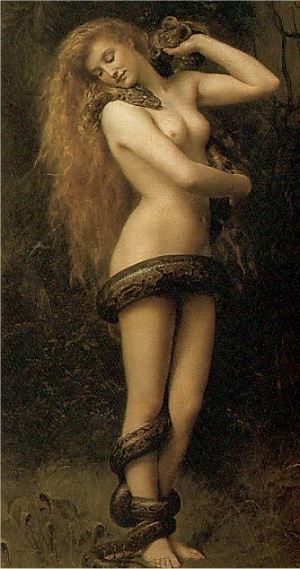
20031031
Nathan of Gaza, apologist for Sabbatai the False Messiah of 1666, and founder of the Messianic cult of Sabbatai.
20031028
20031027
20031025
Small Town Memories
I lived in Aldergrove between 1960 and 1980.
By the time we left, the CAF base was 10 years away from filling in the missile siloes, and the townhouse complex off of 273rd Street near Creekside Elementary was filling up with people escaping from their issues with urban life west of Langley.
We moved get away from kids hanging out in our carport.
My parents ended up in North Delta with me -- my sister'd tied the knot a few years earlier. When my mom caught her raiding the freezer, it was time to establish order...
Patient, Smell Thyself - the cure for bad breath is to improve one's social skills and to give one's personal hygiene a dose of reality i.e. stop thinking about it and start talking to people like a civilized person.
20031024
The Nazi Swastika was taken from Nordic runes, and indirectly may have been related to the swastika proper. However, it is a lucky symbol.
20031021
Shingon Buddhist Intl. Institute: Amida Nyorai - hopefully, this will help explain my earlier reference to Amida Nyorai in detail.
MYTHING LINKS / Asia: Buddhism, General: "...If they need a Brahman to be saved, immediately he becomes a Brahman and preaches the Law for them. If they need a monk, a nun, a layman believer, or a laywoman believer and preaches the Law for them. If they need the wife of a rich man, of a householder, a chief minister, or a Brahman to be saved, immediately he becomes those wives and preaches the Law for them. If they need a young boy or a young girl and preaches the Law for them. If they need a heavenly being, a dragon, a yaksha, a gandharva, an asura, a garuda, a kimnara, a mahoraga, a human or a nonhuman being to be saved, immediately he becomes all of these and preaches the Law for them. If they need a vajra-bearing god and preaches the Law for them...."
EFFECT OF PREHISTORIC CULTURES OF THE LOWER YANGTZE RIVER ON ANCIENT JAPAN - The prehistoric cultures of the Lower Yangtze River made an impression on Japan regarding rice culture.
Origins of the Japanese (reference)
The history of the Japanese relies on the Korean (c. 7th Century CE) and the Chinese (c. 2nd and 3rd Century BCE) records.
However, written Japanese records come later than 612 CE, and paints a mythological history with occasional facts included.
Before the 3rd century BCE, "Shan Hai Jing", the Book or Classics of Mountains and Seas, compiled as 18 chapters from the original records of 32 chapters by Liu Xiang and Lin Xin at the end of the Western Han Dynasty under the Han imperial order, recorded the existence of Wo [Wa] Japan as known in prehistoric China.
Shan Hai Jing 12 states that "Wo (Wa in Japanese) was subject to the Yan statelet of the Zhou Dynasty" which means that "the ancient Wo Japanese travelled through the peninsula to submit tributes to Yan in today's Peking area."
During the 7th Century BCE when Yan moved its capital "from Liulihe to that of Ji, in modern-day, Xicheng District of Beijing".
Thus the Yan statelet of the Zhou Dynasty had made trade ties with the Wa Japanese after its capitol moved to Ji.
Reference
Origins of the Japanese: http://www.imperialchina.org/Japanese.shtml
Yan (state): http://en.wikipedia.org/wiki/Yan_(state)
Tang Dynasty consists of Chinese royalty claiming Laozi as ancestor
Timetables: "Tang (618-907)
- Taizong, Gaozong, Empress Wu, Xuanzong (712-56), etc.
- they claim to be descendants of Laozi because they had the same surname, Li"
Timetables: "Tang (618-907)
- Taizong, Gaozong, Empress Wu, Xuanzong (712-56), etc.
- they claim to be descendants of Laozi because they had the same surname, Li"
Schools of Japanese Buddhism -note Shingon-shu, which is known as Zhenyan Buddhism in China (see previous website).
20031020
Taoism and Buddhism
Creation of the Gods: A Somewhat Less Than Critical Commentary: "Chapter 83. Subjugation of Lion, Elephant, and Jaguar
Candi revealed Fairy Black Cloud as a turtle. Heavenly Master of Outstanding Culture revealed Fairy Dragon Head as a Lion. Universal Virtue revealed Fairy Spiritual Teeth as an elephant. Merciful Navigation revealed Fairy Golden Light as a jaguar. Not long thereafter, Heavenly Master of Outstanding Culture became the Bodhisattva of Outstanding Culture, Universal Virtue became the Bodhisattva of Universal Virtue, and Merciful Navigation became Guanyin, the Buddhist Goddess of Mercy. Buddha revealed Mother Spiritual Tortoise as a tortoise. A swarm of mosquitos arrived and sucked her blood out. The Grand Master of Heaven surrounded himself with 28 Taoist Fairies who were destined to become Gods of the 28 constellations."
Candi revealed Fairy Black Cloud as a turtle. Heavenly Master of Outstanding Culture revealed Fairy Dragon Head as a Lion. Universal Virtue revealed Fairy Spiritual Teeth as an elephant. Merciful Navigation revealed Fairy Golden Light as a jaguar. Not long thereafter, Heavenly Master of Outstanding Culture became the Bodhisattva of Outstanding Culture, Universal Virtue became the Bodhisattva of Universal Virtue, and Merciful Navigation became Guanyin, the Buddhist Goddess of Mercy. Buddha revealed Mother Spiritual Tortoise as a tortoise. A swarm of mosquitos arrived and sucked her blood out. The Grand Master of Heaven surrounded himself with 28 Taoist Fairies who were destined to become Gods of the 28 constellations."
Virtual Matenadaran - The Heritage - OLD ARMENIAN LITERATURE in Details - details myths and legends of historical armenia
Translated version of http://www.heiligenlexikon.de/BiographienH/Hripsime.html - The cult of the 37 virgins exists in Armenia.
The Armenian Church | Our Church - The fall of King Drtad, his madness due to guilt for the murder of the Christian nun, especially the Abbes Gayane and Hripsime, and his redemption by Brother Gregory, whose preaching brought sanity to the Armenians.
20031019
Rationale for mixing religion with erotic images
On one side we have Buddhism emphasizing moderation. On the other, eros in full bloom. The nude form is beautiful, both male and female.
In no way do these erotic images imply that one must violate the precept of Buddhism regarding sexuality: unrestrained sexual activity that harms other sentient beings.
Thus, it is okay to view the naked human form. It is not okay to excuse one's sexual behavior when it leads to abuse of privilege and position in society, be it West or East.
Enlightenment (Meditation)
Enlightenment is when we awake from this dream called life and enter the mindstream, through meditation and mindful practice, all due to the compassion of Amida Nyorai.
Thus am I reminded of an old nursery rhyme:
Row, row, row your boat
gently up the stream
Merrily, merrily
life is but a dream.
Original post: October 19, 2003 4:19 AM
Update posted: March 9, 2013 1751H
Thus am I reminded of an old nursery rhyme:
Row, row, row your boat
gently up the stream
Merrily, merrily
life is but a dream.
Original post: October 19, 2003 4:19 AM
Update posted: March 9, 2013 1751H
Yugyoji - the Dancing Nembutsu
Yugyoji -the Dancing Nembutsu
Ippen's Dream 7/24/96rtf
Harold Stewart on Ippen
Ippen Shonin promoted Dancing Nembutsu, which combines elements of Shinto dance with the main element of Pure Land Buddhism, the Nembutsu, the mantra consisting of the phrase "Namu Amida Butsu" (pronounced 'nah-moo uh-mee-dah boots'). In English, the Nembutsu is translated as "Homage to Amida Buddha".
Nembutsu
This term has several meanings in the history of Buddhism, based on the various connotations of nen (meditating, thinking, pronouncing): meditating on the special features of the Buddha image, holding to the thought of the Buddha, and pronouncing the name of a Buddha. In Pure Land Buddhism from Shan-tao on, nembutsu has been considered to mean the saying of the Name. Honen emphasizes nembutsu as utterance of the Name to be the core of the Pure Land way. Thus nembutsu signifies the Name (myogo) as the manifestation of great compassion and the saying of this Name, Namu-amida-butsu. Shinran further teaches that the saying of the Name is none other than the Name (the call of Amida) working in persons and awakening shinjin in them. When they realize shinjin, it is expressed spontaneously as the nembutsu. Thus,
The practice of the nembutsu is to say it perhaps once, perhaps ten times, on hearing and realizing that birth into the Pure Land is attained by saying the Name fulfilled in the Primal Vow... There is no shinjin separate from nembutsu... There can be no nembutsu separate from shinjin. (Lamp for the Latter Ages)
"Saying the nembutsu" (shomyo) has in the past been rendered reciting, pronouncing, or uttering the nembutsu. "Saying the nembutsu," however, sounds most natural and ordinary, and thus is suited to the religious life of a Shin Buddhist. While there is nothing extraordinary about saying the nembutsu, the realization attached to it, involving one's whole being, evokes an entirely new universe of meaning.
Taikomochi or Houkan, the Male Counterpart to the Geisha... - this proves that the Houkan preceded the Geisha. The sociological implications of the predominance of women as geisha are aspects of an increasingly male-dominated social structure in Japan.
Masamune Shirow's Orion

Orion: http://en.wikipedia.org/wiki/Orion_%28manga%29
The Bardo
The Six Bardos by Kalu Rinpoche - explains the intervals between two things - the Beginning and the End, Life and Death. However, the term Bardo implies that these two things are parts of the whole. That which begins and that which ends are part of the Whole, also called "continuity", that which continues. Even Life and Death are part of the Whole called Samsara, Birth-Life-Death. The Whole is also known as Existence, which continues even when a part of it passes on through the process called Death. Thus, the Bardos are reflections of humanity's celebration of Existence, Tibet's contribution to religious expression.
20031018
Erosmart galleries of nudes and erotic fine art photographs - Dima is an Russian photographer born in Azerbaijan. After the Azerbaijan-Armenian war of 1988 Dima left for the US due to the post-war turmoil.
Saio's Horse
When Great Evil occurs, Great Good will follow.
In China, there once was an old man who lived on the outskirts of a town. He was a little strange for he never got depressed about sad events nor delighted on joyous occasions.
As it happened, one day, his horse escaped. But when his neighbors came to console him, he didn't seem to care much about it saying, "No, it is nothing to be depressed about."
After a few days, his wayward horse came back in the company of a fine horse whose beauty could hardly be matched by any other in the land.
His neighbors joyfully said, "We thought the loss of your horse was a cause for grief, but it turned out to be a reason for celebration." However, the old man did not pay any attention to their reaction saying, "This is nothing to be overjoyed about."
Some time later, the old man's son was out riding the beautiful horse when he fell off, breaking his shoulder. The neighbors once again grieved and tried to console the old man but again he seemed undisturbed by the incident.
Soon thereafter, a revolt broke out in the land and all the able-bodied young men of the village were rounded up and sent off to fight and die. Due to the serious injury to his shoulder, only the old man's son was not conscripted and he alone was left behind and survived.
This parable is the source of the old Chinese proverb "Every happening in one's life is like Saio's horse." "Saio" means "the old man living in the fortress in the north." In truth, it is difficult to judge what is going to be the cause of happiness and unhappiness.
20031017
Glossary of Taoist Terms: "tan-t'ien:
A human being's life force consists of three energies (generative, vital, and spiritual). These energies are said to become impure through attachment and craving. Spiritual growth corresponds to the purification of these three energies. This purification is said to occur at three different tan-t'ien (fields) within the human body. The lower tan-t'ien is one inch below the navel. The middle tan-t'ien (also known as the Golden Palace) is centered at the solar plexus. The upper tan-t'ien is centered between the eyebrows. The tan-t'ien are thought of as cauldrons within which the three energies are refined until they have acquired their original purity. Within the tan-tien, there is also a transmutation of lower energy into higher energy (i.e. from generative to vital to spiritual energy). "
T'ai Chi Chuan & the dance of the five elements: "The Fire element adds the ruling quality to the movements. Centered in the abdomen, below the navel, is 'The Sea of Chi', a place called the 'tan t'ien', or center. This is the meeting ground of Fire and Water, the originating place of chi. Here the Fire of the tan t'ien classically transmutes the Water of the kidneys to 'steam'(chi), which rises up the spine to the top of the head. "
Thus, "I have no home; I make Tan t'ien my home" refers to the spiritual home, the root of Qi, the physical center of gravity of the body.
Usuido -this is where Reiki began. Then the trail led to What is Reiki? and Soulful Energetics: A Healing Journey. To try out Reiki, go to Reiju Gift. Here's more on Reiki at Reiki FAQ Section. You can even sign up for free reiki.
20031016
What Deep Mind is
The Collected Works of Shinran Shorter Works Gutoku's Notes 2: "Deep mind is the deeply entrusting mind. There are two aspects. The first is to believe deeply and decidedly that you are in actuality a foolish being of karmic evil caught in birth-and-death, ever sinking and ever wandering in transmigration from innumerable kalpas in the past, with never a condition that would lead to emancipation. The second is to believe deeply and decidedly that Amida Buddha's Forty-eight Vows grasp sentient beings, and that allowing yourself to be carried by the power of the Vow without any doubt or apprehension, you will attain birth."
20031014
East Asian History Sourcebook: Chu Yuan-Chang: Manifesto of Accession as First Ming Emperor, 1372 C.E.: "'Since the Sung dynasty had lost the throne and Heaven had cut off their sacrifice, the Yuan [Mongol] dynasty had risen from the desert to enter and rule over Zhongguo [China] for more than a hundred years, when Heaven, wearied of their misgovernment and debauchery, thought also fit to turn their fate to ruin, and the affairs of Zhongguo were in a state of disorder for eighteen years. But when the nation began to arouse itself, We, as a simple peasant of Huai-yu, conceived the patriotic idea to save the people, and it pleased the Creator to grant that Our civil and military officers effected their passage across eastward to the left side of the River. We have then been engaged in war for fourteen years; We have, in the west, subdued the king of Han, Ch'en Yu-liang; We have, in the east, bound the king of Wu, Chang Shih-ch'eng; We have, in the south, subdued Min and Yueh [Fukien and Kuang-tung], and conquered Pa and Shu [Sze-chuan]; We have, in the north, established order in Yu and Yen [Chih-li]; We have established peace in the Empire, and restored the old boundaries of Zhongguo. We were selected by Our people to occupy the Imperial throne of Zhongguo under the dynastic title of 'the Great Ming,' commencing with Our reign styled Hung-wu, of which we now are in the fourth year. We have sent officers to all the foreign kingdoms with this Manifesto except to you, Fu-lin [Byzantium], who, being separated from us by the western sea, have not as yet received the announcement. We now send a native of your country, Nieh-ku-lun [Fra. Nicolaus de Bentra, Archbishop of Peking], to hand you this Manifesto..."
Vairambha in the Journey to the West
Vairambha is mentioned in the Journey to the West. According to the following quote, it is a wind.
On the Perfection of Wisdom: "Mahakasyapa replied, "The five desires within the sphere of three realms are unable to move me. It is on account of the power of this bodhisattva's superknowledges manifesting as a consequence of his merit that I am caused to be in this state. It is not that I have any thoughts whereby I can't remain still."
This is just as with Mount Sumeru which when the four directions' winds arise cannot be shaken but which, when the Vairambha winds arise at the end of a great kalpa, is blown flat like a blade of dead grass. We can know from these cases that one of the two kinds of fetters has not yet been cut off. A bodhisattva of this sort should practice the prajna paramita. The Abhidharma explains the matter in this fashion."
However, in the Journey to the West, Vairambha is a hen spirit, mother to the Star Lord of the Mane, represented by the rooster spirit.
20031013
Zhang Boduan - a Taoist Master in Journey to the West
Zhang Boduan is a Taoist Master who is presented as an immortal in Journey to the West, of the Ziyang Temple. As one of the The Five Southern Patriarchs, he styled himself Ziyang or Immortal Ziyang.
References:
Wuzhen pian, a work by Zhang Ziyang: http://en.wikipedia.org/wiki/Wuzhen_pian
References:
Wuzhen pian, a work by Zhang Ziyang: http://en.wikipedia.org/wiki/Wuzhen_pian
An Introduction to Hinduism: "Monotheism, it has been aptly stated 'contemplates the Divine in heaven and polytheism contemplates the Divine in the universe. Polytheism believes in the assembly of gods, each possessing a character of his own. Max Muller coined the word henotheism for indicating the tendency of the Vedic seers to magnify the importance of the particular deity they are praising in a hymn at the expense of the other gods. This has been described as 'opportunist monotheism''. One deity is identified with another or different deities are identified with one divine entity, indifferently described as Ekam (one) and Tat Sat (the reality). "
Maitreya (poem attributed to 1st Dalai Lama)
When the mighty sun of Protector Maitreya shines
On the peak of the Bodhgaya mountain
Through the opening of the lotus of my wisdom
May I satisfy the fortunate beings
Just like insects are satisfied by the nectar in a lotus.
At that time Protector Maitreya will joyfully
Place his right hand on my head and
Predict my attainment of supreme and unsurpassable enlightenment
Thus may I achieve the state of Buddhahood quickly
For the benefit of sentient beings.
— By the First Dalai Lama, during construction of the Maitreya Buddha statue in Tashi Lhunpo monastery, Tibet.
Who is Maitreya Buddha? http://www.maitreyaproject.org/en/maitreya/index.html
20031011
Indra's Net points to the interdependence of nature, including humanity. Indeed, that interdependence is illustrated by
Indra's Net, a metaphor for the non-dual nature of all. Here's some background on the Avatamsaka Sutra.
Indra's Net, a metaphor for the non-dual nature of all. Here's some background on the Avatamsaka Sutra.
20031010
Nature's Mind - This academic article explains Nature's Mind as the Quantum Hologram, which goes beyond Mind as a transcendental being that learns just as an animal or person does.
Indeed, Nature is a living being - but I'll refrain from introducing religion at this point, since it is moot and full of speculation.
All forms of Nature, from man to beasts of all sizes and shapes are parts of Nature having a Mind as one. It is only Western preconceived notions that pretend that individual creatures have minds of their own, apart from other creatures.
In Journey to the West, Zhaojun, Xi Shi, and Liu Cuicui are mentioned as beautiful Chinese women who persevered in times of trial. As well, the Lady of the Moon, Chang'er, is part of the Moon Festival, and is reputedly as beautiful. Here's another story about the Lady of the Moon, Chang Er.
20031009
Basil: Antibiotic and Panacea?
MantraOnNet.com: Sacred Symbols - The Sacred Tulsi - Tulsi is the Indian basil. It is an ingredient for a long life. The basil has phytochemicals that kill germs and reduce the incidence of disease. Here's more on basil.
20031008
Divine Offerings
Om devadhammoyam Priyasurasya - Divine offerings to the Highest Spirit.
Namo arahato buddhassamanam - Homage to Buddha, the essence of spiritual awakening.
Namo arahato dhammassamanam - Homage to the Dharma, the essence of spiritual duty to others.
Namo arahato sanghassamanam.- Homage to the Sangha, the essence of spiritual community.
Virupaksa is mentioned in Journey to the West as a guardian that the Monkey King meets when he is trying to discover a way to defeat the demon king of Mount Jindou.
Virupaksa is one of the Four Great Kings who guard the four directions of North, East, South and West. There is even a Heaven of the Four Great Kings in Indian Buddhist Mythology. These four Great Kings are also known as the Four Guardians of the Directions.
20031007
The Etymology og XUN
Ethics of Confucius, Mencius and Xun-zi by Sanderson Beck - gives a short synopses of the ethics of the Three Sages of China, Confucius, Mencius, and Xun-zi.
The xun or xuin is a musical instrument not unlike the ocarina of Mexico - which makes it a worthy musical instrument to play while reading of Chinese Philosophy.
Chinese Philosophy
The Principles of Confucianism
The Works of Mencius :: Table of Contents
Chinese Cultural Studies: Xunzi inspired Legalism.
Ancient Dynasties: II
20031006
Kunlun Mountains in Journey to the West
The Kunlun Mountain range are a famous range of mountains also mentioned in Journey to the West.
They were probably named after the mountains mentioned in Journey to the West due to one of the highest mountains in the world.
For the Kunlun Mountain of myth is where most of the Chinese god and goddess are supposed to live. It is also where important events in Chinese legends are said to occur.
They were probably named after the mountains mentioned in Journey to the West due to one of the highest mountains in the world.
For the Kunlun Mountain of myth is where most of the Chinese god and goddess are supposed to live. It is also where important events in Chinese legends are said to occur.
Rose Hip Rose
Here's a violent and bloody seinen manga called Rose Hip Rose.

Rose Hip Rose - Manga - recommendation
ROSE HIP ROSE
� Rose Hip Rose � - two pages from one of the manga
�Rose Hip Rose� - review in Chinese of anime series
Rose Hip Rose review in Korean
ROSE HIP ROSE - price in Yen is 514¥
Rose Hip Rose: http://en.wikipedia.org/wiki/Rose_Hip_Rose

Rose Hip Rose - Manga - recommendation
ROSE HIP ROSE
� Rose Hip Rose � - two pages from one of the manga
�Rose Hip Rose� - review in Chinese of anime series
Rose Hip Rose review in Korean
ROSE HIP ROSE - price in Yen is 514¥
Rose Hip Rose: http://en.wikipedia.org/wiki/Rose_Hip_Rose
Ganapati & the Three Treasures (poem)
Homage and divine offerings to Ganapati.
Hail to the Buddha for wisdom.
Hail to the Dharma for truth.
Hail to the Sangha for peaceful discourse.
Hail to the Buddha for wisdom.
Hail to the Dharma for truth.
Hail to the Sangha for peaceful discourse.
20031005
Om Devadhammoyam Priyaganapatasya
Om devadhammoyam Priyaganapatasya.
Deepest devotion to the Highest Spirit of Ganapati.
Namo Arahato Buddhanamam. - Hail to the Buddha, the symbol of spiritual awakening!
Namo Arahato Dhammanamam. - Hail to the Dharma of compassion!
Namo Arahato Sanghanamam. - Hail to the Sangha, the community of bodhisattvas!
Deepest devotion to the Highest Spirit of Ganapati.
Namo Arahato Buddhanamam. - Hail to the Buddha, the symbol of spiritual awakening!
Namo Arahato Dhammanamam. - Hail to the Dharma of compassion!
Namo Arahato Sanghanamam. - Hail to the Sangha, the community of bodhisattvas!
20031004
Om Devadhammoyam Priyasurasya
Om devadhammoyam Priyasurasya. -
Deepest devotion to the Highest Spirit.
Namo Arahato Buddhasanam. - Hail to the Buddha, the symbol of spiritual awakening!
Namo Arahato Dhammasanam. - Hail to the Dharma of compassion!
Namo Arahato Sanghasanam. - Hail to the Sangha, the community of bodhisattvas!
Deepest devotion to the Highest Spirit.
Namo Arahato Buddhasanam. - Hail to the Buddha, the symbol of spiritual awakening!
Namo Arahato Dhammasanam. - Hail to the Dharma of compassion!
Namo Arahato Sanghasanam. - Hail to the Sangha, the community of bodhisattvas!
20031001
Homage to Ganapati (poem)
Om devaganapattoyam Priyasurasya - Divine offerings to the High Spirt of Ganesha!
Namo arahato buddhanamam - Homage to the Buddha.
Namo arahato dhammanamam - Homage to the Dharma.
Namo arahato sanghanamam - Homage to the Sangha.
Namo arahato buddhanamam - Homage to the Buddha.
Namo arahato dhammanamam - Homage to the Dharma.
Namo arahato sanghanamam - Homage to the Sangha.
Subscribe to:
Posts (Atom)