Search This Blog

Showing posts with label marijuana. Show all posts

20140618

You Failed, DEA! (satire)


Recent news that the War on Drugs is a dismal failure brought a smile to my face.

To the DEA and the RCMP in Canada: "I told you so." Your anti-cannabis agenda was never about eradicating a dangerous drug, and you know it. It was about spreading propaganda and disinformation to make it look like you were saving society from the "devil weed." In the process, you demonized pot smokers and treated some of them as though they were major drug fiends who would become like Justin Bourque.

The truth is, Bourque — and the celebrity Amanda Bynes — are rare cases of THC psychosis caused by the intricate interaction between THC and stress on the human mind, and would clear up had the person just moderated their THC intake.

In short, "less is more" as in "less pot results in more control over stress in one's life." High consumption of marijuana never results in less stress since it is a fallacy to assume THC cures stress. What it does is chill you the fuck out, but beyond a certain level of consumption that calmness leads to anxiety, and later insomnia, mania and even psychosis.

IMO this is why the hard core pot advocates will disagree with me on this. They smoke so much the mania that THC causes in high doses prevents them from understanding that high THC consumption will lead to more anxiety and might spiral out of control.

Yet one symptom of psychosis is a state of constant denial, because it is easier to deny the truth than to give up one's current grasp on reality. If we let go of our preconceived notions of reality, then we might learn something deep and meaningful about reality itself.

However, you DEA and you RCMP have failed in stopping the War on Drugs. Your only reason for continuing the war is to look like a hero and hoodwink Americans and Canadians.

In fact, by establishing yourself in Canada, you are contributing to the problem rather than solving it.

I'm sure the only reason the DEA moved to Vancouver and Toronto was to pressure PM Harper to introduce minimum sentences on marijuana possession and related nonsense.

I also suspect that certain gangs in BC formed because the strategy of placing key members of teen gangs in the same prison and youth remand centres without keeping adequate checks and balances due to the fact that youth corrections personnel have little training in self defense against violent teenaged gang members.

In short, the shortcomings of BC youth corrections combined with more violence teenagers who have been groomed to become narcissistic led to even more violent youth gangs.

As well, it is a well known fact that families were broken up over marijuana charges, due to the propaganda against cannabis.

20140128

Legalize Cannabis! (satire)

Am I for legalization of some drugs? Yes.

Which ones?

Marijuana, because it is less harmful than cigarettes; entheogens such as LSD and ibogaine, for drug rehabilitation which lasts; MDMA, which in pure form is safer than methamphetamines and other stimulants, though not as safe as caffeine; Salvia, which is a kappa opioid agonist with some disassociative properties, but is the only carbohydrate with mild and moderately brief hallucinogenic properties -- mainly for entheogenic purposes involving rehabilitation from other drugs; and two banned drugs which never got to market because the State fears pro-social drugs which are safer than alcohol and tobacco, because no one in power wants to lose profits and sales, and also because sociability is supposed to be learned, not medicated.

The last two drugs never got out of a lab setting, because today's State is afraid of a pro-social drug which is safer than alcohol and tobacco. Alcohol and tobacco companies would lose profit if the government had a safer alternative to alcohol and tobacco such as pagoclone.

Note that I am promoting the legalization of some drugs for medicinal use. I do not endorse the recreational use of any drugs mentioned previously, because it involves drugs which are currently being manufactured illegally.

I do not include marijuana manufactured by State-sponsored industry such as the crappy medicinal marijuana (MM) as it is not being produced in a manner which enhances its medicinal properties.

Sativex consists of cannabinoids from a blend of marijuana, and is superior to gov't-approved MM. But it is only approved for pain by cancer victims, because no doctor would prescribe it off label. That'd be illegal.

However, a variant of Sativex could be recommended for psychoses caused by mental illnesses such as schizophrenia, if they moderated the THC and raised the CBD level a tad.

CBD is a natural sedative, the use of which is known to demonstrate marked changes in schizophrenics, whereas THC consistently may cause psychoses, sometimes requiring sedation by benzodiazepines such as Ativan.

It is for political reasons that cannabis is illegal in Canada, due to the fear-mongering about psychosis and drug-induced schizophrenia in a gross attempt of social control by the State of mostly-harmless pot smokers.

Marijuana consumption may cause anxiety among certain users which might appear as psychosis and their behavior may be moderated by THC, resulting in clinical observation of schizophrenic-like behavior. However, such behavior is not permanent and thus is not consistent with schizophrenia.

In most cases of recreational use, marijuana is safer than alcohol and prescribed psychotropic medication used to control behavior associated with psychosis arising from the purported drug-induced schizophrenia. Indeed, chronic users of pot do not experience psychosis or schizophrenia. Their behavior can be explained as acute and specific to recent marijuana use.

Yet stricter cannabis laws criminalizes behavior among a small proportion of the People (the medical marijuana growers) due to an unfounded fear by the State of pot smokers of psychosis and associated behavior.

Indeed, the marijuana section of the narcotics control act does nothing to protect recreational drug users from dealers, but actually reduces their access to a safe method of distribution via medical marijuana growers, who now cannot produce marijuana legally.

I also object to the assumption by the police of the fallacy that all marijuana grow-ops are the work of drug gangs. This character assassination is used to criminalize medical marijuana grow-ops that are safe and known to be "mom & pop" operations.

As well, the marijuana laws promote the assumption that all grow-ops are the work of gangs.

While marijuana legalization is slowly happening in the US, all across Canada, marijuana legalization is far from becoming a reality, due to its heavily politicized nature.

Even so, the legalization of marijuana will not result in more cases of drug-induced schizophrenia since that diagnosis is sometimes used to profit the psychiatry industry. Considering its role in social control, this scare tactic regarding regular consumption of marijuana from an early age may be used by the State to control the drug-seeking behavior of young mothers and other cannabis users.

Therefore, the marijuana laws appear to be designed to raise drug crime with increased risk of death for gang members. On the other hand, the growth of marijuana dispensaries is a much needed harm reduction strategy which should not be criminalized as "illegal distribution" of marijuana.

State control of marijuana potentially places more people at risk than legalization.

Legalize cannabis now!

Originally posted: December 9, 2012 4:29 PM

Reference:

Pagoclone, the "banned" pro-social drug: http://en.wikipedia.org/wiki/Pagoclone
Bretazenil, another pro-social drug: http://en.wikipedia.org/wiki/Bretazenil

The cannabis conundrum: http://www.theguardian.com/commentisfree/2009/oct/29/cannabis-david-nutt-drug-classification

A clear danger from cannabis: http://www.theguardian.com/commentisfree/2009/oct/29/cannabis-schizophrenia-classification

This article proves that chronic use of marijuana does not promote psychosis or drug-induced schizophrenia. http://jop.sagepub.com/content/26/1/144

20131226

Disinformation about Grow-ops in Canada Fueled By Anti-Marijuana Propaganda (satire)

When you look over the statistics about marijuana grow-ops in Canada, the follow three facts become apparent:

  1. One in twenty grow-ups in Canada are related to gangs and criminal activity.
  2. 6 percent of all grow-ups have guns.
  3. Police overestimate the number of grow-up by 100 percent — if police estimate 100 grow-ops in a city, then there actually only 50.
Apparently the Ministry of Justice ignores these facts and the Harper government justified the harsher marijuana laws in the Narcotics Control Act by acting on the disinformation the police presented regarding grow-ops. Thus the result of such laws is to criminalize 95 percent of grow-ops, which are mom and pop operations. As well, 94 percent of grow-ops are clean of firearms. Yet both the mainstream media and the police routine claim otherwise, in order to justify harsh penalties in the section of the Narcotics Control Act regarding marijuana. Therefore the marijuana laws are based on fallacies perpetuated by the various police forces across Canada. Thus they are based on propaganda not facts. For our elected politicians base their decisions about marijuana based on #propaganda that over-inflates of the facts about marijuana grow-ops. Therefore the marijuana laws are based on hyperbole not truth. In essence, the mass media news outlets and police forces in Canada ignore and suppress the truth about grow-ops to justify marijuana prohibition. A law based on fallacies is a law that profits the State and penalizes the People unjustly. Hiding the truth about marijuana grow-ops scares the one-percent so much that their anti-marijuana lobbyists contribute to the cultural genocide of harmless marijuana advocates, most of whom are law-abiding citizens with no ties to gangs. Taxpayers are being duped into thinking marijuana grow-ops are criminal operations, when only 5 percent of grow-ops are run by gangs, and only 6 percent of all grow-op cases are associated with firearms. IMO the only purpose of the anti-marijuana hype is to make it seem as though the Harper government is doing something about gangs and criminal activity associated with marijuana. It only proves the continued criminalization of marijuana will continue to be a game of political one-upmanship. For the disinformation about marijuana grow-ops in Canada — especially in British Columbia — is fuelled by the anti-marijuana propaganda machine consisting of mass media news outlets and police forces across Canada.
Media and police not talking straight about pot: http://www.vancouversun.com/news/Media+police+forces+talking+straight+says+researcher/9324592/story.html

20131108

Gateway Drug Myth (satire)

A few days ago, I noticed a couple with their child.

What brought them to my attention was the fact that the mother was drinking from a can of beer. This was after hearing their baby cry non-stop for about fifteen minutes on the bus.

Nobody dared challenge the couple lest harm befall the child.

Yet harm has already been done, because the baby was earnestly trying to attract the attention of its parents, both of whom displayed overt neglect of their child.

When I got off the bus, I was slightly upset. When I was about to report the intoxicated couple to Skytrain attendants, the Skytrain arrived.

Rather than do the right thing, I boarded the train.

At that moment, I failed a child who is being neglected by its parents due to their addiction issues.

My hope is that karma does not bite my ass when this child grows up.

Even so, I justify my inaction by stating that a worse fate for that child might be the alternative to neglect and later abuse by birth parents: being removed and placed in a foster family and the additional complexity of that outcome.

It does not matter if the child removed due to neglect in its birth family. That child will still face the risk of neglect and perhaps abuse in a foster home. Adoption is no better because the same risks in an adoptive family.

In fact, BC's Ministry of Children and Family Services (MoCFS) has consistently failed children, mainly because people behave differently in front of authority. They sometimes put on an act to look like a caring family when under scrutiny.

A case in point: a child was born to an alcoholic mother. MoCFS officials removed the child as "at risk" but made the mistake of placing the child in the care of the mother's brother, a man who was known in their community as a violent alcoholic.

Within months in the care of the brother's family, the child ended up beaten to death because, while drunk, he beat up the child because it desperately sought care and comfort by crying non-stop for hours.

It is also likely the child was placed in that family because they lied to Ministry officials in order to collect additional benefits to support their social drinking, which they may have claimed was under control.

In another case, MoCFS officials threatened a single mother with a child with removal of her child if she did not give up her recreational use of marijuana. The mother never neglected the child and family members could vouch for her caring behavior even when under the influence.

Yet Ministry officials considered marijuana to be more dangerous than alcohol, despite the previous scenario in which a dangerous alcoholic killed his niece.

In yet another case, a two year-old girl was released in care of an uncle, who hitchhiked all the way to BC from Saskatchewan and managed to convince MoCFS officials to given him airfare to return to Saskatchewan. Rather than buy air passage, the man spent it on recreational drugs, which he had been under the influence in the presence of social workers! Instead of being a proper caregiver, the uncle beat her and locked her away when he was out abusing drugs. He even mentally abused her by calling her an "evil child".

IMO the BC Ministry of Children and Family Services exercises legal form of child abduction based on its premise regarding illegal drugs and alcohol i.e. that marijuana smokers put their child at risk which is greater than the risk that chronic alcoholics pose to children under their care.

Furthermore, the Ministry abducts children based on information that parents are using drugs and/or alcohol reported to them without doing an assessment to determine that the parents are addicts. They also allow fail to do a background check on out-of-province relatives of children in their care.

Indeed, it is possible for a concerned busybody to call up the emergency hot-line and state falsely that the parents are chronic alcoholics or drug addicts, when in actual fact the parents use alcohol and/or marijuana recreationally but not in front of their children. Usually the concerned busybody may report false information due to malevolence towards the parents, sometimes because it helps their court case regarding heroin and/or methadone.

Additionally the RCMP are also complicit in the legal abduction of children by the Ministry, since they accompany Ministry officials to help remove child-at-risk.

IMO the BC Ministry of Children and Family Services operates a form of legalized child abduction and adoption service. It does so while promoting the illusion that the BC cares for at-risk children.

In fact the Ministry of Children and Family Services has shown that legalized child abduction has consistently placed children at greater risk because there is no way of closely scrutinizing foster and adoptive families without violation of privacy rights.

Also, the Ministry is unable to closely monitor certain social workers who recreationally use alcohol and/or cocaine with the aim to reduce the risk of errors in judgments made in cases where an official with a substance use issue is biased against families who recreationally use marijuana.

This is because of federal drug laws and the false assumption that recreational drug users are placing their children at risk.

IMO Ministry officials also carefully scrutinize everyone with kids who regularly drink socially, rather than just going after chronic alcoholics and drug addicts.

It is so simple to implement this policy. All a social worker has to do is closely monitor social drinking after hours and anonymously report the most chromic of alcoholics in a special whistle-blowing program that protect the rights of the whistle-blower.

Since research has discovered that food is more addictive than drugs, health officials should closely monitor obesity because food is the gateway drug to illicit drugs and alcohol.

Of course, we know food isn't a gateway drug.

I merely followed the same simplistic logic used by Ministry of Children and Family Services to subject parents to the same scrutiny the RCMP uses to ensure illegal drugs remain under close scrutiny due to drug laws that only lead to enormous profits for criminal gangs.

Legalizing drugs would solve this problem by causing the price of most illegal drugs to drop so low that most crime gangs would buy it for cheap to peddle in countries with strong drug laws at enormous profit. Thus, global drug legalization could save more lives than the current "war on drugs" ever has.

As for crime gangs who would turn from peddling drugs locally to selling it globally, that can be stopped by licensing drug use and limiting supply to the licensee. If the licensed user is known to be selling his drugs, selling it at a higher cost wouldn't be feasible since almost anyone could go to the government-approve drug dispensary for cheaper prices. It would be impossible to sell the drugs in Canada. In order for him to resell his drugs, the drug user would then have to buy a vendor's license and a business license. The RCMP would then have to monitor sellers of the drugs for selling drugs without a license.

IMO the reason why the RCMP believes recreational drugs should remain illegal (drugs are dangerous when abused) is actually a smoke screen for the true reason why such drugs remain illegal (drugs are more profitable when illegal and thus should be policed). In essence then, the powers that be wish recreational drugs to remain illegal because then taxpayers' money is best spent in policing the drug laws. The criminals win and the justice system wins.

Such drug policies look like they are made by narcissists to protect their interest in alcohol and tobacco.

Such policies also harm single mothers' mental well-being via the gateway drug myth that determines the use of emotional blackmail to pressure said mothers simply because they recreationally use marijuana while not also carefully scrutinizing mothers who drink recreationally or are former heroin addicts on methadone. That is a potential human rights issue.

IMO the propaganda against marijuana was designed to dupe the people of Canada into believing that marijuana is a dangerous drug simply because it looks like the RCMP policing marijuana is a good use of taxpayers' dollars.

Yet billions of dollars of profit are made annually by crime gangs due to drug laws, profit that would dry up when our drug laws are abolished and returned to being the health issue of addiction.

Once that is done, we can spend taxpayers' money wisely through harm reduction and addiction research.

For the cheapest way to solve addiction , research the most addictive substance in the world: high fat, high sugar food.

20130102

Male Subway Pusher: Hate Crime or Cultural Clash?

Imagine if you would, two men, one an unemployed Korean man, drunk and totally smashed, and a homeless black man, off his bipolar medication and high on pot.

Regarding the Korean, his wife argued with him that morning, possibly about getting a job. As for the black man, he's from Sierra Leone, an apostate Muslim.

They meet before the turnstiles of the New York City subway in the Q Line.
Right from the start they argue. However, the Korean is so drunk he is actually harmless.

However the black man is not only incapacitated by marijuana, he also has been off his bipolar medication since Hurricane Sandy made him homeless.

It was the aggression that Han displayed by repeatedly charging him, not once but three times before Davis made his mistake and pushed the man away, thus escalating what was simple verbal assault into a physical assault.

Due to the effect of THC on reaction time, Davis then could only watch as Han was crushed and rolled between the oncoming subway train as it pulled into the station, leaving a blood streak to the dismay of waiting passengers who witnessed the altercation between the two men.

By doing so, Davis made a serious error both in his timing and in his hesitation to save the man he pushed away.

In his recent interview with a mass media outlet, Davis then attempts to reduce the impression that he didn't mean to push Han that hard. However, his action after doing so was to simply watch him get hit by the train and then leave. A truly regretful man would have simply awaited the police, rather than trying to change his appearance, which to me indicates guilt and the desire to "hide until the coast is clear".

Thankfully, the police caught Davis before the full impact of letting Han die worsened his mental condition. For guilt is for the weak worse than hell on Earth.

While I really feel sorry for Han's family (his daughter and wife), the tear felt appeal by the daughter is interesting. After being asked why no one on the station tried to help rescue Han in the 23 seconds before he died, she said "What's done is done." And then she added, ""The thought of someone helping him up in a matter of seconds would have been great,"

However, Mr. Davis' trial hasn't begun yet. On December 11, he appeared before the court. Though I haven't found a news story to follow up on his charges and when the trial will be.

Suspected Subway Pusher Charged With Murder: http://abcnews.go.com/US/suspected-subway-pusher-charged-murder/story?id=17886112#.UONpEUhgaUF

Naeem Davis: 'Subway pusher ' Says Ki-Suk Han 'Attacked Me First': http://newsone.com/2096716/naeem-davis-murder-charge-ki-suk-han-subway-pusher/

Naeem Davis, Fatal Subway Pusher, Says He Was High On Pot, 'Didn't Mean To Push That Hard': http://www.huffingtonpost.com/2012/12/07/naeem-davis-man-who-confessed-fatally-pushing_n_2258875.html

Subway pusher Justified: http://www.thedailybeast.com/cheats/2012/12/11/lawyer-subway-pusher-justified.html

Is NYC Subway Pusher a "Hate Criminal?" :http://www.canadafreepress.com/index.php/article/51601

"What's Done is Done": http://lancasteronline.com/article/ap/789403_NY-subway-victim-s-daughter---What-s-done-is-done-.html

20110112

A Reflection on the Endocannaboid System

In this post, I will be briefly discussing cannabidiol (CBD) and THC, first describing CBD and contrasting its effects with that of THC. Then I will mention the new pain reliever Sativex as an example of what medical marijuana can provide without having the risks associated with smoking it.

After that, I will explain that marijuana with both CBD and THC in it are more beneficial than marijuana with high amounts of THC.

Finally I will conclude with a short discussion of wild salmon oil, its benefit for depression and explain why by discussing Omega-3 oil, the two essential fatty acids in them, and the endocannabinoid system.


CBD in cannabis may prevent the potential of psychosis which THC may cause in susceptible people who smoke it. Initial side effects of THC include fear, anxiety, and introvertive anhedonia.

CBD is what gives the cannabis smoker the headache when smoking the hemp variant of marijuana, which has a higher proportion of CBD and very little THC.

It also has other useful properties as antidepressant and pain reliever.

For example: the new pain reliever Sativex, which is applied as a mouth spray, has both CBD and THC in it.1

Sativex is only available by prescription to cancer patients for pain, and to MS patients with nerve pain, spasticity, overactive bladder and other symptoms.

In other research, it turns out that marijuana with both CBD and THC in it are of the most benefit to a cannabis user.

According to the British Journal of Psychiatry, a study was done comparing three groups: non-users, cannabis users with THC detected and cannabis users with both THC and CBD detected.

The THC users demonstrated a much higher rate of unusual experiences with marijuana than the other two groups.

In contrast, the THC-CBD users had "much lower introvertive anhedonia (a feeling of emptiness that makes one want to hide away) scores than the Δ9-THC only group and non-cannabis user group."2

As well, I have found that moderate doses of wild salmon oil in capsule form relieve mood swings in depression. The probable reason for this is related to the fact that salmon oil contains a lot of omega-3 oil3 of which two essential fatty acid have useful healthy benefits to the human body, especially the brain: DHA and EPA. They are metabolized into endocannabinoids for use in the body's endocannabinoid system, a group of neuromodulatory lipids and their receptors involved in many physiological processes including appetite, pain-sensation, mood, and memory.4

Since THC causes transient psychosis i.e. a temporary break from reality which is reversed by using less marijuana, the trend towards cannabis containing high-THC has risks to a user's mental health due to chronic use.

In contrast, strains of marijuana with a balanced blend of CBD and THC are safer for moderate use.

Thus my research so far proves my "less is more" philosophy towards all forms of neuropsychopharmaceuticals, including alcohol and marijuana.

With moderate consumption of fish and regular supplementation of wild salmon oil and a healthy diet, it is possible to keep the endocannaboid system working properly. Finally, I would like to state that a well nourished brain really only needs a dose of cannabis on rare occasions.


References:
  1. Sativex: http://en.wikipedia.org/wiki/Sativex
  2. THC-CBD users have lower introvertive anhedonia: http://en.wikipedia.org/wiki/Cannabidiol
  3. Salmon oil contains a lot of omega-3 oil: http://en.wikipedia.org/wiki/Omega-3_fatty_acid
  4. http://en.wikipedia.org/wiki/Endocannabinoid_system

20110101

How I Overcame the Fear of Medication

I used to be afraid of medication until I tried them.

Now they have made it harder for nicotine to addict me, and even harder for THC to make me anxious and paranoid.

I'm even wise to the meth BS. Why would anyone take crappy street amphetamines when there are ADHD meds which are safer and less toxic when used as directed?

As well, if you seriously used nicotine, then you'd have an over-the-counter antidepressant in inhalant format called cigarettes. In low doses nicotine is a stimulant; in high doses, it is as effective as a first-generation anti-histamine in sedation and "calming the nerves".

The good news is, THC still is a sedative in low doses. The terrific news is, mirtazapine blocks the munchies because as an antihistamine, it's an effective sedative with munchies as side effect. :p

Of course, I'd never mix alcohol or hard drugs with my medication, because that's a waste of my effort to manage my disease, which is depression.

Since humor is a mature way of dealing with uncomfortable feelings of anxiety, fear and dread, I plan on dealing with depression with humor to counteract any negativity arising from those feelings.

In this way I have overcome my initial fear of medication by choosing which of them I wish to take. I chose mirtazapine because of its safety profile for sedative action, and chose gabapentin of its safety in relieving pain and helping me to express myself.

However, this blog entry does not represent the full picture of depression. It only represents the protective effect of mirtazapine and gabapentin on my brain. They are more useful than cigarettes and marijuana, because of their safety profile. Yet I would be foolish to solely rely on them, for they are not magic bullets.


References:

Nicotine's psychological effects: http://en.wikipedia.org/wiki/Nicotine#Psychoactive_effects
Gabapentin and alcohol withdrawal syndrome: Am J Health-Syst Pharm—Vol 65 Jun 1, 2008
p. 1039

Comparison of Gabapentin and Phenobarbital for treatment of alcohol withdrawal: DOI: 10.1080/10550490500419110

Comparison of Gabapentin and bupropion SR for stopping smoking: Nicotine & Tobacco Research Volume 7, Number 5 (October 2005) 809–813

Gabapentin for stopping smoking: Nicotine & Tobacco Research Volume 9, Number 2 (February 2007) 291–298

20100602

Commentary on Massive pot bust made near Prince George

http://www.bclocalnews.com/news/95176849.html

June 2, 2010: This is not a a new item of importance, except to illustrate how the war on drugs works: publicize grow-ops as "evil" and demonize marijuana.

It too is a form of oppression against a harmless drug made harmful by act of parliament (the drug laws in Canada in particular).

Ottawa's stance on marijuana is what continues to criminalize marijuana and to demonize pro-420 activists and the medical marijuana community.

Free Marc Emery NOW!!

20070820

Busting the Three Myths about Marijuana


Reporters have been recently fear-mongering about marijuana, again.

It makes you go mad, causes lung disease and skin cancer, they cry, but use bad science to exploit fear in people.

Marijuana Increases the Risk of Psychosis by 40%: This one turned out to be totally wrong. Apparently a correlation between marijuana use and psychosis doesn't necessarily mean that marijuana caused the psychosis. Many of the researchers made this clear in their findings, but reporters left it out. Furthermore, none of the stories on this topic explained that the risk of psychosis is small, so a 40% increase isn't that significant to begin with. Reporters also failed to observe that massive increases in marijuana use over the past century have not corresponded with increased rates of psychosis.

Comment: in that study, scientists discovered that if you've been using marijuana since you were 12, you stand a 40 percent chance of developing a psychosis. However, few studies have found that if a person aged 40 starts smoking marijuana would develop a psychosis.

If anything, anxiety would be reduced. With psychosis being a possible side effect of unrelieved anxiety, I think any scientist investigating psychosis is being bought off by pharmaceutical companies with vested interest in their anti-psychotic medications.


Smoking a Joint is as Bad For Your Lungs as 5 Cigarettes: This report also turned out to be almost entirely bogus. Shockingly, "air flow" was the only category (of several) in which marijuana was determined to be more harmful. Researchers stated that marijuana was 2.5 to 5 times more harmful than tobacco in this category, which reporters simply rounded up to 5 for the headline (behold the lofty journalistic standards of Reuters). Reporters also failed to mention conclusive research proving that marijuana does not cause lung cancer; a notable omission since "bad for your lungs" likely implies cancer for many readers. Finally, media reports failed to explain that marijuana users consume far less per day, and do not continue using for nearly as many years as tobacco smokers.

Comment: bad science is the leading cause of anxiety, and journalist are the biggest cause of it.

Marijuana May Cause Skin Cancer: I don't know anything about skin cancer, so I won't attempt to refute the findings of this Harvard study. The manner in which it was reported, however, leaves much to be desired. The FOX News headline reads "Study: Marijuana Use May Cause Skin Cancer." Only upon reading the article does the reader discover that only one extremely rare form of skin cancer has been associated with marijuana, and that the researchers claim that more research is needed. Furthermore, only people with weakened immune systems are even susceptible to this infection. A more appropriate headline would have been "Study: Marijuana May Cause Skin Cancer Under Very Rare Circumstances."


In short, anti-pot propaganda is based on bad science.

It makes me wonder why they fear the most harmless plant in the world.

Could it be because without control the anti-pot fanatic feel powerless? I think so.

20070724

Big Pharma and Sugar Kills More than Illegal Drugs Do

More deaths are attributable to pharmaceuticals than to illegal drugs.

Indeed, there is no epidemic of illegal drug use.

Research has shown that LSD helps autistic kids to communicate better, that MDMA in a therapeutic setting is more effective than a lifetime of psychotropic drugs for mental illness, and that marijuana is more effective in reducing the effects of anorexia than psychiatric medication.

The only reason why the Canadian Medical Association is against illegal drug decriminalization is because of the loss of profits of pĥarmaceuticals. Even the anticipated surge of drug use would not be as high as they predict.

Thus the reason illegal drugs are illegal is because Big Pharma would rather drug addicts be placed on their medications until they become dependent on psychotropics.

However, Big Pharma also provides drugs which are legitimate and more likely to kill people, when not used as directed.

Although the same logic applies to illegal drugs, legal drugs such as alcohol and tobacco are used more often and have killed more people. Even the overconsumption of sugar has lead to cardiovascular disease, diabetes and obesity, which kill more people than illegal drugs.

Decriminalization of illegal drugs is better than the current system in place for the profit of the State. For drug addiction is a medical problem, and illegal drugs should be decriminalized precisely because their prohibition has only contributed to drug-related crime (home invasions and theft).

It might not look as pretty as now, but police resources are better spent reducing the harm drug abuse causes rather than perpetuating the myth that illegal drugs are more dangerous than legal ones.

20070519

Why Police Should Not Use Marijuana

Police makes call to Emergency.

The hilarious part is when the cops says he and his wife are dying, adding that "time is going by slowly."

Definitely, the paranoia is due to having no clue that one of the side effects of THC is "impaired sense of time."

20070429

The Propaganda of Drug Prohibition


"The propaganda that caused people to believe that Germans were a master race and Jews were an inferior race and needed to be exterminated has an exact parallel in the war on marijuana. You create false evils, create fear and hatred for a certain class of people and proceed to inflict horrific punishment on the targets of your lies. All the while seizing totalitarian power for yourself and your cronies based on the need for people to abandon their normal concepts of right and wrong and leave those decisions entirely to the propagandists." -- Daryl Verville, in his documentary The Naked Queen

In a recent example, the US FDA indicates it has bought the propaganda about medical marijuana which it claims has no benefits. At the same time, the FDA has historically allowed SSRI anti-depressants go on the market while pharmaceutical companies have hidden data which shows risk of suicide amongst patients, especially teenagers.

Meanwhile, marijuana has been considered a dangerous narcotic which causes anxiety and paranoia, but only among one out of four people who have used it since they were teens. This means that among people who use it occasionally (less than once a week) as adults, more than 75% of them will experience no ill effects, apart from mild intoxication, increased ability to get to sleep at night and associated changes in sleep patterns. In short, for the majority of users, marijuana is a non-addictive alternative to habit-forming benzodiazepines, used by consumers by prescription as sleep aids and sedatives.

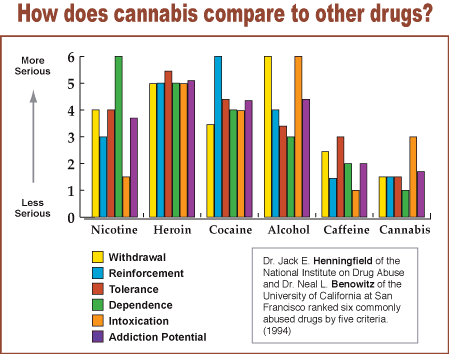
Does the propaganda against marijuana indicate the relative harmlessness of the drug when compared to cigarettes (nicotine) and alcohol? No, most anti-marijuana literature addresses the health risks, including cognitive deficits and especially high use side effects, and claims marijuana is addictive. Indeed, most anti-marijuana literature uses subtle scare tactics and promotes abstinence.

However, neither the pro-marijuana nor the anti-marijuana proponents advocate moderation of use. It is barely brought up in debates for or against the drug.

Quite possibly, moderation of use may be covered under harm reduction. If moderation works for some alcoholics, it can work for marijuana users.

"Because let's face it: there's no bigger pusher than the state. There are far more dangerous and mind-altering drugs than marijuana being pushed on us every day by huge pharmaceutical companies, with the blessings of our doctors and the government. And no one's raiding the drug companies." -- Bonnie Burstow, senior lecturer at the Ontario Institute for Studies in Education

20070407

Why I Didn't Take Meds

Regarding meds, my doc (GP) strongly objects to me being medicated with any psychotropic medications, due to the risk of addiction (from benzos), discontinuation/withdrawal syndrome (of anti-depressants) etc.

He even advised against anti-psychotics.

During my recent visit to him, he stated twice that borderline personality disorder counterindicates against medication because, from what I have discovered from my research, of being comorbid with suicide *when medicated*.

Basically, a BPD person would threaten to OD on meds because the pdoc (psychiatrist) isn't competent enough to do him any good. And proof of such incompetence is giving him drugs that could kill him in the first place!

Though, in my case, I have never had therapy by a shrink nor have I ever exhibited any of the behavior that make most shrinks "give up" on BPD people.

IMHO most of the meds just "manufacture" the illness e.g. cause side effects which may be rationalized as "symptoms of the diagnosed mental disorder" by the pdoc.

Untrue. Most behaviors are side effects of the medication in that the meds amplify what were once eccentric behaviors.

I have a friend whose medication renders him able to "talk to himself" - he can hold a lucid conversation with his invisible friend, including "channelling" his "friend and his replies- which may be a drug-induced mania or psychosis and is possibly evidence of a neuroleptic being administered at a higher dose than it ought to be.

When he is off his meds, he has difficulty communicating which sometimes leaves him so frustrated he will hit inanimate objects, be it his computer monitor or dashboard of a car. This too is effect of the meds.

Prior to the meds he was shy, socially withdrawn, yet of a high intellect. The fact that he is now able to communicate more freely shows to me that he is still intelligent. However, he requires therapy but avoids it - he even avoided meditation training while initially hospitalized.

What really works for me for therapy is sleep: benadryl 50 mg when I absolutely want sleep.

However, what really works is marijuana. 2 puffs and my sleep cycle is normalized for 48 hours. After 48 hours, the chronic insomnia is back with a vengeance. However, I do not take marijuana regularly because my roommates have noticed my sleep behavior.

The good news is, I am of the 75% of people who is not negatively affected by 9-THC i.e. no psychosis, no hallucinations, no mania.

In contrast, the first time I took two 50 mg of Gravol I had a minor "trip". So I am strict with the benadryl.


As of December 23, 2012, I only take gabapentin and flexeril - been taking both for about a year and it is better than mirtazapine.

I only use benedryl in emergencies.

As of now I only have cetirizine for the case of flu, when every breath is filled with mucus and wheezing.

Other than that, I feel that I am less incapacitated by my curren nightly dose of 100 mg gabapentin and 10 mg of flexeril.

This reigiment follows my Less is More philosophy towards drugs of all kinds.

For I believe strongly that the more is better philoosphy is deadly.

20070404

Two Puffs Did It for Me

BC Bud has to be one of the highest sources of 9-THC. Though I've yet to manufacture my own 11-THC by buying and eating a hash brownie, that may be on my list of to-do marijuana experiences.

For now, let me tell you about my recent pot experience: I sucked two puffs two times somewhere in the armpit of Surrey, Newton.

After about an hour of feeling intoxicated, I got let off at the Newton Exchange. Then I climbed aboard the 324 to Surrey Central Exchange.

What a busride! I had no clue where I was for most of the trip, but managed to get let off at 132nd Street and 104th Avenue.

My walk home was uneventful.

When I arrived home, I promptly went to bed, mainly because I didn't feel like sitting still on the computer, trying to thread thoughts into something comprehensible.

About three hours ago, I finally got out of bed. For about five hours in bed, I was probably sober. Though I based my sobriety on the ability to have an erection, I didn't notice a change until the following morning, possibly around 10 AM. :P

However, the best thing that I've experienced was as I was sobering up the night before, feeling calm and without any racing thoughts indicative of hypomania.

Yes, I experienced no psychosis, not even anxiety.

Even so, I appear to be a "pussy" when it comes to pot, as it took two puffs to render me stoned.

Kudoes to my best friend, M, her friend D. and N. This is fucking awesome!

20070318

Mind Blowing Pot Leads to Reduced Use

According to research published in the journal Addiction, "First, the use of cannabis and rates of psychotic symptoms were related to each other, independently of observed/non-observed fixed covariates and observed time dynamic factors (Table 2). Secondly, the results of structural equation modelling suggest that the direction of causation is that the use of cannabis leads to increases in levels of psychotic symptoms rather than psychotic symptoms increasing the use of cannabis. Indeed, there is a suggestion from the model results that increases in psychotic symptoms may inhibit the use of cannabis."

Source: Fergusson, David M., John Horwood & Elizabeth M. Ridder, "Tests of Causal Linkages Between Cannabis Use and Psychotic Symptoms," Addiction, Vol. 100, No. 3, March 2005, p. 363.

What this means is, people who blow their minds on high quality pot stop using.

In short, their psychosis leads to them quitting pot.

Compare this to crack and meth addicts who get obsessed about getting high, and whose psychosis leads them to commit crimes to support their habits.

Pot users tend to learn to moderate their consumption.

This is why there are only 2.5% pot users worldwide.

20070308

Just So You Know...

Hi again!

Juat so you know, despite my recent promotional writing in favor of marijuana, the last time I got high on pot was prior to March 2005.

How can someone who's quit pot promote it? Doesn't that violate a Canadian law?

Let me answer the second question: with respect to marijuana, not promoting marijuana would violate human rights. I am not promoting getting high on marijuana.

I support the educated use of marijuana, and would consider anyone who tries to smoke a whole doob in one sitting to be no different from an alcoholic or a drug addict.

Now, let's get to the first question: I quit marijuana because:


  1. It's illegal in Canada

  2. I don't have a medical illness to be registered as a Medical Marijuana user

  3. Too many people who use marijuana are stuck in a "let's get high" rut and are boring


So instead, for my insomnia, I have to use diphenhydramine or Gravol to sleep sometimes. There's an cumulative risk of developing heart disease from diphenhydramine use as well as building tolerance to the stuff. Though currently (Dec. 24, 2012) I use gabapentin and flexeril.

Also, I refuse to take more than 50 mg of the stuff due to the risk of psychosis from large doses. That is what causes those weird visions and other side effects.

Even though diphenhydramine does sedate me and keeps me from freaking out, I just don't want to talk to my subconscious and inner daemons.

While I know two puffs of a doob would chill me out and get me ready for sleep, I will not knowingly break a law or risk psychosis from ingesting too much THC.

However, I still feel it is my duty to educate people about marijuana to the best of my ability.

10 Things You Need to Know about Marijuana

Reprinted in the public interest without permission from a flyer by the Family Council on Drug Awareness. This flyer is being distributed at public functions such as concerts, school gatherings, trade shows, and craft shows. Any typographic errors, unless noted, are mine. The author of this post has no affiliation with any agency or persons related to this document, and refrains from editorial comment.

"Prohibition... goes beyond the bounds of reason in that it attempts to control a man's appetite by legislation and makes a crime out of things that are not crimes. A prohibition law strikes a blow at the very principles upon which our government was founded." -- Abraham Lincoln December, 1840

This pamphlet was researched and produced as a public service by the Family Council on Drug Awareness P.O. Box 71093, LA, CA 90071-0093

Additional copies available from:

BACH, PO Box 71093, L.A., CA 90071-0093 35 cents apiece, Ten for $2.00, 100 for $10

1 Q. What is Marijuana?

A. "Marijuana" refers to the dried leaves and flowers of the cannabis plant [1], which contain the non-narcotic chemical THC at various potencies. It is smoked or eaten to produce the feeling of being "high." The different strains of this herb produce different sensual effects, ranging from sedative to stimulant.

2 Q. Who Uses Marijuana?

A. There is no simple profile of a typical marijuana user. It has been used for 1000s of years for medical, social, and religious reasons and for relaxation [2]. Several of our Presidents [3] are believed to have smoked it. One out of every five Americans say they have tried it. And it is still popular among artists, writers, musicians, activists, lawyers, inventors, working people, etc.

3 Q. How Long Have People Been Using Marijuana?

A. Marijuana has been used since ancient times [4]. While field hands and working people have often smoked the raw plant, aristocrats historically prefer hashish [5] made from the cured flowers of the plant. It was not seen as a problem until a calculated disinformation [sic] campaign was launched in the 1930s [6], and the first American laws against using it were passed [7].

4 Q. Is Marijuana Addictive?

A. No, it is not [8]. Most users are moderate consumers who smoke it socially to relax. We now know that 10% of our population have "addictive personalities" and they are neither more nor less likely to overindulge in cannabis than in anything else. On a relative scale, marijuana is less habit forming than either sugar or chocolate but more so than anchovies. Sociologists report a general pattern of marijuana use that peaks in the early adult years, followed by a period of levelling off and then a gradual reduction in use [9].

5 Q. Has Anyone Ever Died From Smoking Marijuana?

A. No; not one single case, not ever. THC is one of the few chemicals for which there is no known toxic amount [10]. The federal agency NIDA says that autopsies reveal that 75 people per year are high on marijuana when they die: this does not mean that marijuana caused or was even a factor in their deaths. The chart below compares the number of deaths attributable to selected substances in a typical year:

Tobacco...............................340,000 - 395,000

Alcohol (excluding crime/accidents).............125,000+

Drug Overdose (prescription)............24,000 - 27,000

Drug Overdose (illegal)...................3,800 - 5,200

Marijuana.............................................0

*Source: U.S. Government Bureau of Mortality Statistics, 1987

6 Q. Does Marijuana Lead to Crime and/or Hard Drugs?

A. No [11]. The only crime most marijuana users commit is that they use marijuana. And, while many people who abuse dangerous drugs also smoke marijuana, the old "stepping stone" theory is now discredited, since virtually all of them started out "using" legal drugs like sugar, coffee, cigarettes, alcohol, etc.

7 Q. Does Marijuana Make People Violent?

A. No. In fact, Federal Bureau of Narcotics director Harry Anslinger once told Congress just the opposite - that it leads to non-violence and pacifism [12]. If he was telling the truth (which he and key federal agencies have not often done regarding marijuana), then re-legalizing marijuana should be considered as one way to curb violence in our cities. The simple fact is that marijuana does not change your basic personality. The government says that over 20 million Americans still smoke it, probably including some of the nicest people you know.

8 Q. How Does Marijuana Affect Your Health?

A. Smoking anything is not healthy, but marijuana is less dangerous than tobacco and people smoke less of it at a time. This health risk can be avoided by eating the plant instead of smoking it [13], or can be reduced by smoking smaller amounts of stronger marijuana. There is no proof that marijuana causes serious health or sexual problems [14] but, like alcohol, its use by children or adolescents is discouraged. Cannabis is a medicinal herb that has hundreds of proven, valuable theraputic uses - from stress reduction to glaucoma to asthma to cancer therapy, etc. [15].

9 Q. What About All Those Scary Statistics and Studies?

A. Most were prepared as scare tactics for the government by Dr. Gabriel Nahas, and were so biased and unscientific that Nahas was fired by the National Institute of Health [16] and finally renounced his own studies as meaningless [17]. For one experiment, he suffocated monkeys for five minutes at a time, using proportionately more smoke than the average user inhales in an entire lifetime [18]. The other studies that claim sensational health risks are also suspect, since they lack controls and produce results which cannot be replicated or independently verified [19].

10 Q. What Can I Do About Marijuana?

A. No independent government panel that has studied marijuana has ever recommended jail for users [20]. Concerned persons should therefore ask their legislators to re-legalize and tax this plant, subject to age limits and regulations similar to those on alcohol and tobacco.

For More Information, Write:

Family Coucil on Drug Awareness P.O. Box 71093, LA CA 90071-0093

FOOTNOTES TO THE TEXT:

1. The same plant, known as hemp, has an estimated 50,000 non-drug commercial uses including paper, textiles, fuels, food and sealants, but these uses are also banned by existing laws. Sources: Encyclopedia Britannica, federal documents and historical records.

2. Coptic Christians, Rhastafarnians [sic], Shintos, Hinus, Buddhists, Sufis, Essenes, Zoroastrians, Bantus, and many other sects have traditions that consider the plant to have religious value.

3. Their personal correspondence and records reveal that U.S. Presidents Jefferson, Madison, Monroe, and others smoked hashish, as did Benjamin Franklin and Mary Todd Lincoln. President John F. Kennedy is also reported to have smoked marijuana to relieve his back pain. Many of America's greatest leaders and Founding Fathers (including George Washington) were hemp farmers. Sources: National Archives, published reports.

4. Archeologists report that cannabis was possibly the first plant cultivated by humans - about 8000 B.C. - and was used for linen, paper, and garments. Source: Columbia University, _History of the World_. It was being smoked in China and India as early as 2700 B.C.

5. Turkish smoking parlors were popular in both Europe and America. as well as the Middle and Far East, as recently as the turn of the Century.

6. The exhaustive Indian Hemp "Raj" Commission report (1986) by British authorities found no reason to restrict its use. But the notorious yellow journalist William Randolph Hearst fabricated and published horror stories about marijuana that were eventually investigated and shown to be lies, but not until long after the marijuana prohibition was enacted in 1938. Source: Larry Sloman, _Reefer Madness_.

7. Laws against marijuana were passed a year after the invention of a machine to harvest and process hemp so it could compete commercially against businesses owned by Hearst, the DuPonts and other powerful families. Source: Jack Herer, _The Emporor Wears No Clothes_.

8. Marijuana does not lead to physical dependency. Costa Rican Study, 1980; Jamaican Study, 1975; Nixon Blue Ribbon Report, 1972, et. al.

9. Source: Psychology Today, Newsweek, et.al.

10. Source: All univerity medical studies: UCLA, Harvard, Temple, etc.

11. Costa Rican Study, 1980; Jamaican Study, 1975; "The legal drugs for adults, such as alcohol and tobacco...precede the use of all illicit drugs." Source: National Academy of Sciences.

12. The FBI reports that 65-75% of criminal violence is alcohol related. "Pacifist syndrome" testimony was given by Federal Bureau of Narcotics Director Harry Anslinger before Congress (1948). However, the "Siler" Study conducted by the U.S in Panama (1931) reported "no impairment" in military personnel who smoked marijuana while off duty.

13. "The only clinically significant medical problem is that scientifically linked to marijuana is bronchitis. Like smoking tobacco, the treatment is the same: stop smoking." Source: Dr. Fred Oerther, M.D.

14. Coptic study (UCLA), 1981; "There is not yet any conclusive evidence as to whether prolonged use of marijuana causes permanent changes in the nervous system or sustained impairment of brain function and behavior in human beings." Source: National Academy of Sciences.

15. Source: Dr. Tod Mikuriya, _Marijuana Medical Papers_. Marijuana could replace at least 10-20% of prescribed drugs now in use. Source: Dr. Raphael Mechoulam. Marijuana was a major active ingredient in 40-50% of patent medicines before its ban.

16. 1976

17. 1983

18. The U.S. Government reports that the oral dose of cannabis required to kill a mouse is about 40,000 times the dose required to produce symptoms of intoxication in man. Source: Lowe, _Journal of Pharmacological and Experimental Therapeutics_, Oct. 1946.

19. In another famous study, Heath/Tulane (1974), wild monkeys were brutally captured, then virtually suffocated in marijuana smoke over a period of 90 days. Source: National Institute of Health.

20. Examples: the "LaGuardia" Committee Report (New York, 1944) and President Richard Nixon's Blue Ribbon "Shafer" Commission (1972).

Marijuana effectively reduces pain

For the first time in nearly 20 years, a U.S. researcher has been able to publish the findings of a clinical study of therapeutic cannabis. The study, conducted by Dr. Donald Abrams of the University of California San Francisco medical school, found that HIV/AIDS patients suffering from neuropathic pain got twice as much relief from cannabis as compared to a control group.

The randomized placebo-controlled trial involved 50 patients who were randomly assigned to smoke either cannabis (3.56% tetrahydrocannabinol) or identical placebo cigarettes with the cannabinoids extracted three times daily for 5 days. Smoked cannabis reduced daily pain by 34% (median reduction; IQR = -71, -16). Greater than 30% reduction in pain was reported by 52% in the cannabis group and the first cannabis cigarette reduced chronic pain by a median of 72% vs. 15% with placebo.

Researchers concluded that smoked cannabis was well tolerated and effectively relieved chronic neuropathic pain from HIV-associated sensory neuropathy.

See http://neurology.org/cgi/content/abstract/68/7/515

This study suggests strongly that marijuana reduces chronic pain.

20070227

Why Marijuana is Still Criminalized In Canada

According to Canadian mass media, it may appear that the only reason marijuana is kept illegal is so that grow-ops can pop up in suburban neighbourhoods for concerned citizens to find and report to the police, all to justify the "war on Drugs" mentality.

For the Canadian national drug policy criminalizes marijuana manufacture and limits the amount a person can possess before possession charges may be applied.

By making illegal the possession of marijuana and by criminalizing its manufacture, Canada can justify a war-on-drugs mentality with stronger laws regarding marijuana.

In essence, the law makes marijuana valuable to criminals who then can create demand.

Grow-ops flourish specifically because marijuana is illegal. If it were legal and regulated by government, illegal grow-ops would case to exist.

Consequently, if marijuana were legal, then the danger associated with manufacture would be eliminated.

Between 1999 and 2003, the decriminalization of marijuana was debated in Ottawa.

Because of strong pressure by the US, much of the recommendations made by Canadian senators were quietly ignored by Ottawa.

Additionally, the national Green Team was too lucrative for the RCMP to agree to changes in the law that would impact their public service.

Thus, criminalizing marijuana profits both the criminals and the police.

And that's what makes marijuana dangerous, not the plant itself.